What Is Microcement Furniture? A Complete Guide to Design, Features and Benefits

Microcement furniture is furniture finished with thin, hand-applied layers of microcement to create a seamless, concrete-like surface. It is often used for dining tables, coffee tables, plinths and bespoke pieces where a clean and sculptural finish is desired.
The appeal of microcement is its balance of strength and softness. It can echo the look of concrete, stone or plaster, but with more flexibility in shape, scale, colour and finish than solid concrete furniture.
At Qube Furniture, we specialise in handcrafted microcement furniture, creating made-to-order and bespoke pieces for homes, interior designers and commercial interiors. This guide explains what microcement furniture is, how it is made, how it differs from concrete furniture, the benefits of microcement furniture and what to consider before choosing a microcement piece for your space.
At a Glance: Microcement Furniture
Microcement furniture is furniture finished with a thin, hand-applied cement-based coating. The microcement forms the visible surface of the piece, creating a seamless, mineral finish with a concrete-like appearance.
Microcement is usually applied over a furniture form rather than cast as a solid material. This means microcement furniture can offer the visual depth of concrete without the same weight or design limitations as solid concrete furniture.
When made and sealed correctly, microcement furniture is durable and water-resistant. It is suitable for everyday use and can be used outdoors, although proper care helps to ensure microcement furniture lasts for a long time.
Microcement furniture can often be customised in size, colour, shape and finish. This makes it a strong choice for bespoke commissions and for interior designers.
What is Microcement?
Microcement is a thin decorative cement-based coating applied in layers to create a continuous mineral surface. It is commonly used on floors, walls, bathrooms, kitchens, worktops and furniture.
Its main benefits are its flexibility and versatility. Because microcement is applied as a surface finish, it can follow different shapes and forms, including curved, cubic and sculptural designs. It can achieve the look of concrete, stone or plaster while remaining more adaptable than a solid concrete material.
What is Microcement Furniture?
Microcement furniture is furniture finished with thin, hand-applied layers of microcement to create a seamless, stone-like surface. The microcement forms the visible outer finish, while the furniture structure underneath gives the piece its shape, strength and proportions.
Rather than being cast entirely from one solid material, microcement furniture begins with a carefully made form. This form can be designed around the intended size, shape and use of the piece before the microcement is applied, refined and sealed by hand. As a result, microcement furniture can be highly tailored, from clean-lined tables and plinths to curved, sculptural or bespoke forms, while still achieving the visual depth of concrete or stone.
Because each piece is formed and finished by hand, no two surfaces are exactly the same. Subtle variation in tone, texture and movement is part of the character of microcement, giving every piece a quiet sense of individuality.

Modern Microcement Dining Table Yushoku
What types of furniture can be made with microcement?
Microcement can be used across many types of furniture, including:
Dining tables
Coffee tables
Side tables
Console tables
Bedside tables
Plinths
Display furniture
Bespoke commercial furniture
This makes microcement a strong choice for contemporary homes, interior designers, hospitality spaces and commercial interiors. To see how the material translates into finished pieces, explore Qube’shandcrafted microcement furniture collection.
How is Microcement Furniture Made?
Microcement furniture is made by creating the furniture form, preparing the surface, applying microcement in thin layers, refining the finish and sealing the surface.
The process is hands-on and considered. The underlying form gives the furniture its structure, while the microcement creates its visible tone, texture and material character. The final seal helps protect the surface while preserving its refined feel.
Typically, the process includes:
Design and brief - furniture size, shape, use, colour and finish are agreed.
Furniture form - the underlying structure is created.
Surface preparation - the form is prepared for microcement application.
Microcement application - thin layers are applied and built up by hand.
Refining the finish - texture, tone and movement are developed.
Sealing - the surface is protected for everyday use.
Final checks - the piece is reviewed before delivery or installation.
What Colours and Finishes are Available?
Microcement furniture is often chosen in calm, natural tones such as warm white, grey, taupe, beige, stone and deeper concrete-inspired shades.
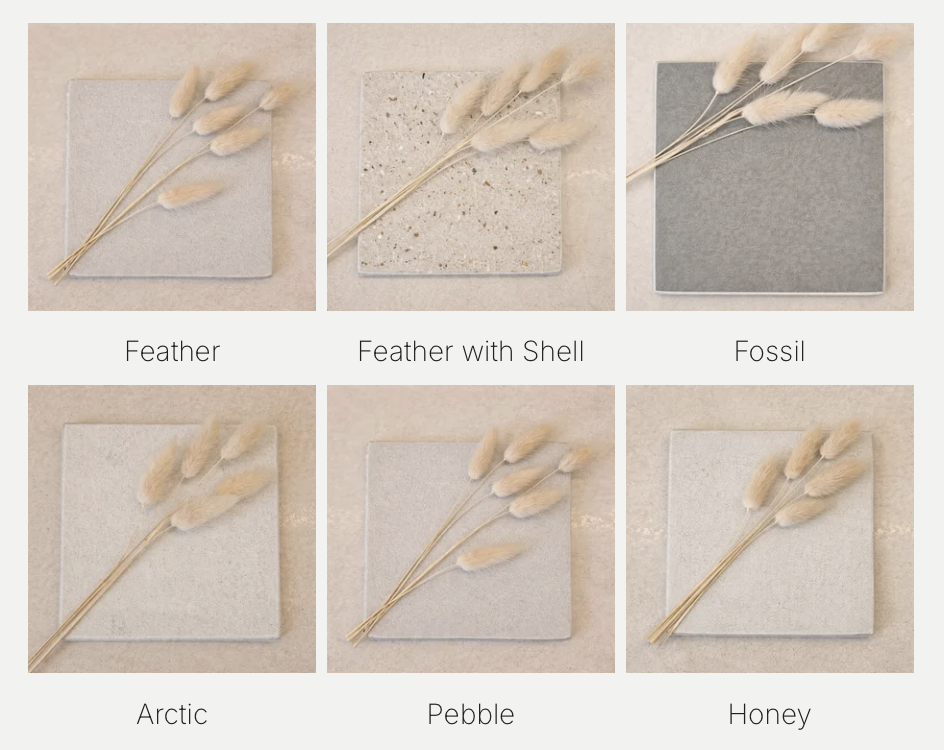
These colours work beautifully in contemporary interiors because they feel grounded, understated and easy to pair with natural materials such as timber, linen, wool, leather and stone.
Some makers, like Qube Furniture, can offer a variety of colours and bespoke finish options, making microcement useful for interiors with a specific palette or design brief.
Is Microcement Furniture Durable?
Microcement furniture is durable when it is made with care, sealed correctly and looked after properly.
The sealed surface is water-resistant and can resist everyday marks, but it should still be treated as a crafted furniture surface rather than an indestructible material. Spills should be wiped promptly, and harsh chemicals or abrasive objects should be avoided.
With the right care, microcement furniture offers a practical balance of durability, texture and elegance.
How Heavy Is Microcement Furniture?
Microcement furniture is usually lighter than solid concrete furniture because microcement is used as a surface finish rather than as the entire structure of the piece.
It still has a substantial, grounded feel, but is often more practical for homes, hospitality spaces and commercial interiors than comparable solid concrete furniture.
The exact weight depends on the size, internal structure and design of the piece.
Where Can Microcement Furniture Be Used?
Microcement furniture is highly adaptable and can be used across residential and commercial spaces, both inside and outside.
In the home, it works well in dining rooms, kitchens, living rooms, hallways, garden rooms and outdoor spaces where the piece has been designed and sealed for exterior use.
In commercial settings, microcement furniture is well suited to restaurants, hotels, cafés, retail spaces, showrooms, reception areas and design-led workspaces. Its clean form and tactile finish make it particularly effective in interiors where furniture needs to feel both functional and considered.
How Do You Clean and Care for Microcement Furniture?
Microcement furniture is simple to care for when treated properly.
For everyday cleaning, use a soft damp cloth and wipe spills promptly. Avoid abrasive pads, bleach, acidic cleaners and harsh chemicals. Coasters, placemats and protective pads are recommended for dining tables, coffee tables and frequently used surfaces.
Are Microcement and Concrete Furniture Different?
Yes. Microcement furniture and concrete furniture can look similar, but because they are constructed differently, they differ in appearance, weight, design flexibility, surface character and everyday practicality.
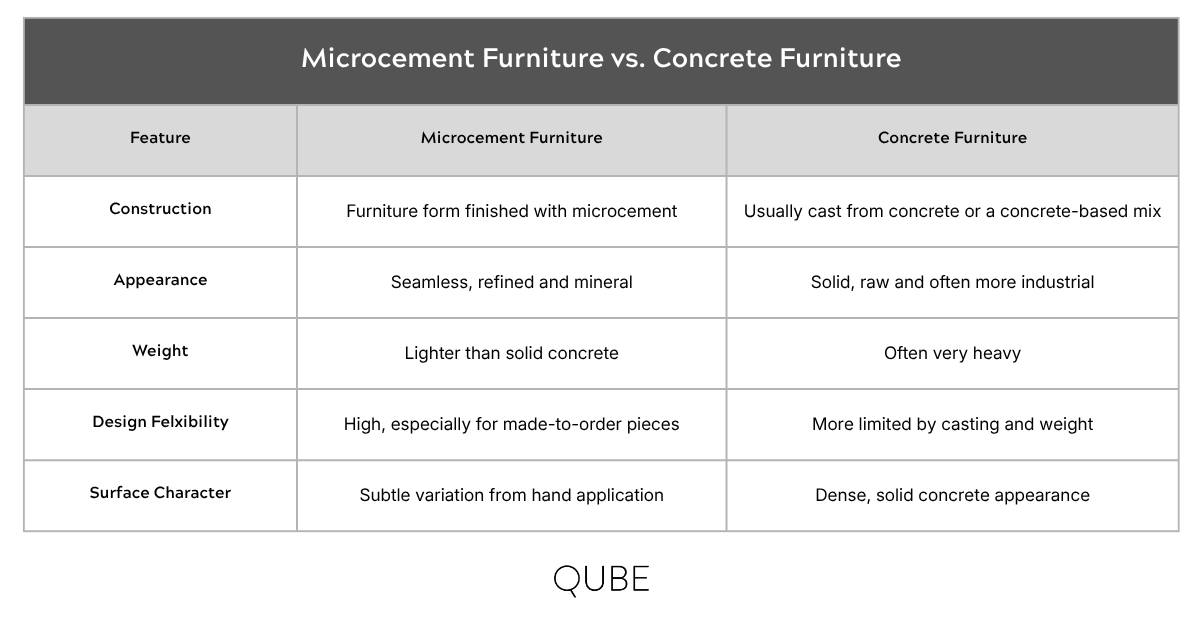
For many homes and commercial spaces, microcement offers the visual character of concrete with more flexibility, a more refined finish and less physical weight.
Benefits of Microcement Furniture
Microcement furniture is chosen for its balance of texture, simplicity and flexibility. It offers the sculptural presence of concrete with a softer, more refined finish that works beautifully in contemporary spaces.
Key benefits include:
Seamless, stone-like appearance
Concrete-inspired look without solid concrete weight
Tactile handcrafted finish
Bespoke size, shape, colour and finish options
Suitability for clean lines, curves and sculptural forms
Use across homes, hospitality and commercial interiors
Indoor and outdoor potential when sealed and specified correctly
What to Consider Before Buying Microcement Furniture
Microcement furniture is a strong choice for spaces where texture, proportion and quiet architectural detail matter. Before choosing a piece, it is worth considering how it will be used, where it will sit and which finish will best complement the surrounding interior.
For the home, think about the scale of the room, the colour palette, how often the surface will be used and whether the piece will sit indoors or outdoors. Because microcement furniture can often be made to order and be made bespoke by microcement furniture specialists like Qube, these decisions can help shape a piece that feels considered, practical and naturally suited to the space.
For commercial and hospitality interiors, consider the role the piece needs to play within the wider design scheme. A restaurant table, hotel console, reception plinth or retail display piece may each need a different balance of scale, durability, finish and visual presence. Thinking about daily use, placement, cleaning routines and access for delivery or installation helps ensure the final piece is both beautiful and well suited to the setting.
Chosen thoughtfully, microcement furniture can offer more than a surface finish. It can become a lasting focal point: tactile, sculptural and tailored to the way the space is lived in or used.
Frequently Asked Questions About Microcement Furniture
-
Microcement furniture is furniture finished with thin, hand-applied layers of microcement. It creates a seamless, stone-like surface, often with a concrete-inspired appearance.
-
Microcement is a decorative cement-based coating applied in thin layers to create a continuous mineral surface. It is commonly used on floors, walls, bathrooms, kitchens, worktops and furniture.
-
No. Concrete furniture is usually cast from concrete or a concrete-based mix. Microcement furniture uses microcement as a surface finish, which allows for a more refined look and greater design flexibility.
-
Yes, microcement furniture can be durable when made and sealed correctly. Like any handcrafted surface, it should be cared for properly and cleaned using suitable methods.
-
Microcement is not fully waterproof by itself, but sealed microcement can be highly water-resistant. For furniture, spills should still be wiped promptly and standing water should be avoided.
-
Some microcement furniture can be used outdoors if it has been designed and finished for external use. Always check whether the specific piece is suitable for outdoor conditions.
-
Use a soft damp cloth and avoid abrasive pads, bleach, acidic cleaners or harsh chemicals. Coasters and placemats are recommended for everyday protection.
-
Sealed microcement is designed to help resist everyday marks, but spills such as coffee, wine, oil or acidic liquids should be wiped away promptly to reduce the risk of staining.
-
Microcement furniture is usually lighter than solid concrete furniture, but the exact weight depends on the size, structure and design of the piece.
-
Yes. Microcement is well suited to bespoke and made-to-order furniture because it can be applied to different forms, sizes and designs. This makes it a strong option for custom dining tables, coffee tables, side tables, consoles and commercial furniture.
For a piece tailored to your space, finish and design brief, contact Qube to discuss a bespoke microcement piece.
Final Thoughts
Microcement furniture offers the visual character of concrete, stone or plaster with the flexibility of a hand-applied finish. With each piece’s seamless surface, tactile texture and sculptural presence, it is well suited to modern homes, interior designers and commercial interiors.
Explore Qube’s signature microcement furniture collection to view available pieces, colours and finishes, or contact Qube to discuss a bespoke commission.